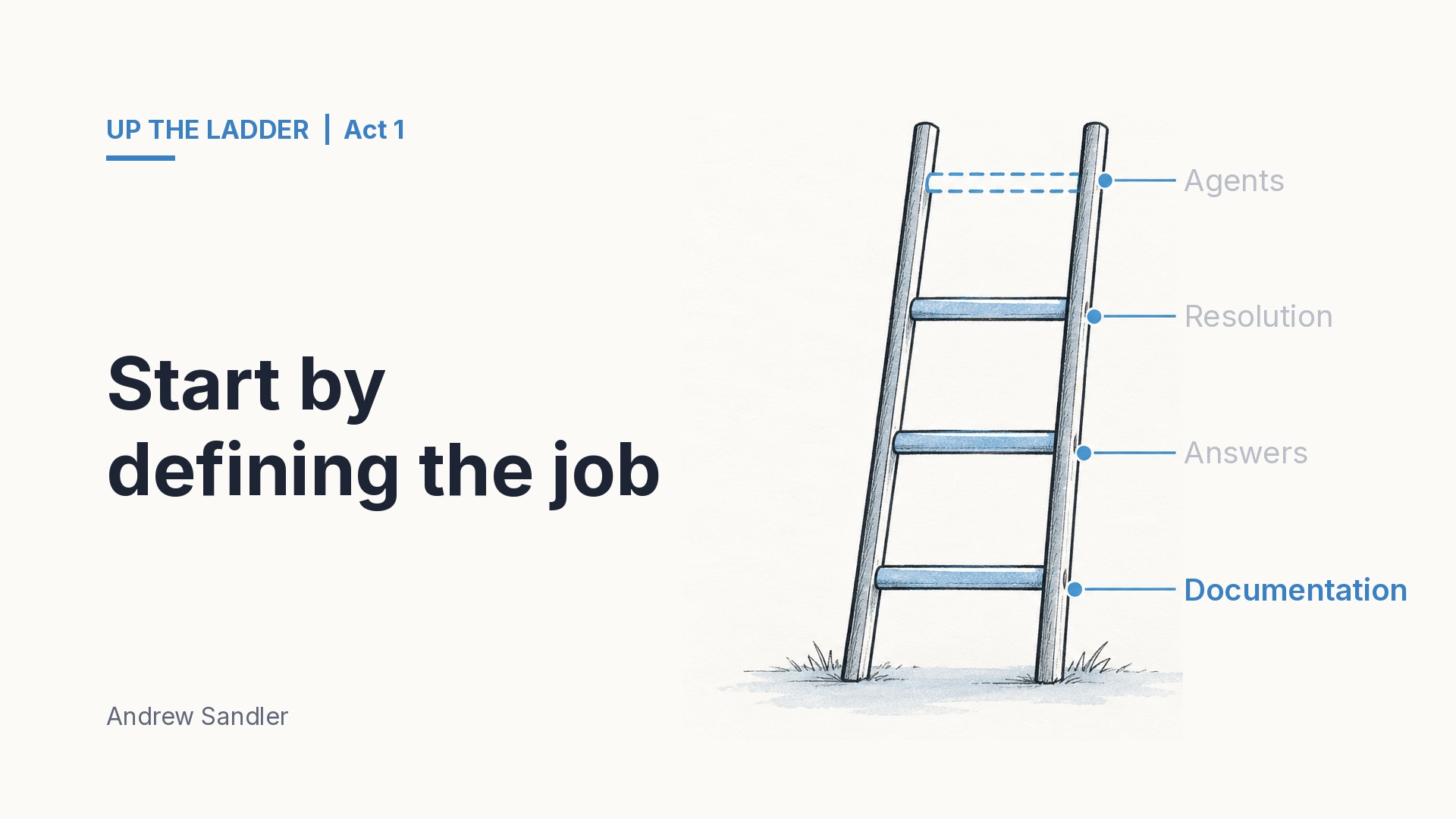
Start by defining the job
When I took on Adobe Help in 2020, every team that depended on it had a reasonable view of its job. Product teams wanted their features covered. Support wanted fewer contacts. Writers wanted tools that made content easier to publish and maintain.
Each request made sense on its own, and together they gave us no way to choose what came first. A help experience judged by everyone’s measure at once ends up optimized for none of them.
So my first decision was to hold off on setting priorities. I spent the early part of the work listening, then wrote down what help was for and how we would judge it.
Who I talked to
I talked with the people who depended on help and the people who maintained it: business and product leaders, content strategists, writers, and leaders responsible for customer experience.
I asked each group roughly the same questions. What is help for? What does it do well today? Where does it let you down? What would you stop doing if you could? If you had a magic wand, what would you change right now?
Asking everyone the same questions made the answers comparable, and it showed me where one team’s problem was also another team’s problem.
What I heard
Three themes kept coming back.
- Authoring was hard. The tools made a simple correction more work than it should have been, so content struggled to keep pace with product changes. When a fix takes effort to publish, small errors stay on the page longer.
- Older content had piled up alongside current material. Keeping an article accurate took effort, and deciding whether it still belonged on the site needed someone with the time and the mandate to make the call.
- Information lived in separate channels. When the same guidance was maintained in several places, an update in one could leave another behind, and customers could find two answers that disagreed.
All three sat in the process around the writing: how content was created, maintained, reused, and retired. So the scope of the work grew from the articles to that process.
A shared definition of the job
I built a cohesive strategy which accounted for four groups: customers, authors, the places that reused our content, and the publishing platform.
Customers needed a useful answer when they were stuck. Authors needed to publish and maintain that answer without fighting their tools. Other surfaces needed to reuse the guidance without creating another copy to keep current. The platform had to make all three possible.
That gave us a way to compare requests. A proposed improvement had to solve a problem we’d heard about and fit the job we’d agreed help should do. Requests that failed the test could still be good ideas; they waited.
How we judged progress
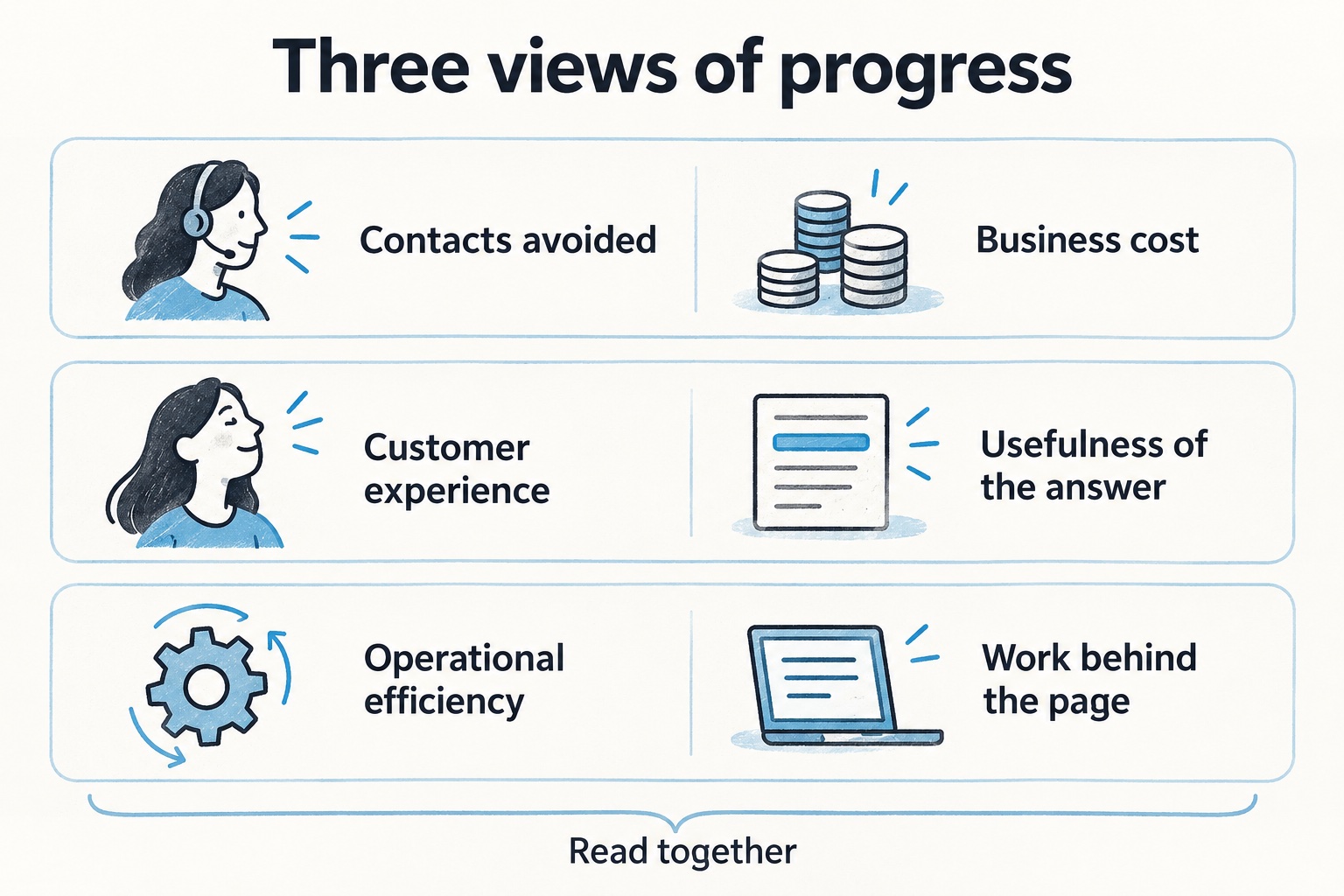
The scorecard combined three kinds of measures.
Contacts avoided connected the work to a cost the business understood. Engagement showed whether customers found and used the content, though that number always needs interpreting. Operational efficiency covered the work behind the page, meaning the time and effort to create, update, and retire content.
We read them together. A publishing improvement might show up in an operational measure well before it affected customer behavior. Judged on avoided contacts alone, it would have looked like nothing happened. Judged on publishing speed alone, we’d have had no idea whether customers noticed.
I’d use the same structure again: one business measure, one signal of customer experience, and one measure of the work that supports both.
What it cost
Listening takes time, and a new leader is expected to act. Spending the early months in conversations meant some visible improvements started later than they could have.
In return, each priority had a reason beyond my own preference. When requests competed later, we could go back to the problems people had described. The scorecard gave leadership and the team a shared way to discuss where the work was helping and where it still needed investment, and the arguments about whether help was “working” got shorter.
A listening tour you can use
- Pick the groups that rely on a service and the people who maintain it. Ask each group the same core questions so you can compare what you hear.
- Write down themes after each conversation, then check them with the people you heard from. Give weight to problems that come up again and again. Give weight, too, to a problem that hits one small group hard, since a count of mentions will miss it.
- Use what you learn to define the job in a sentence. Then pick a few measures that tie the work back to the business and to the customer. When the next urgent request arrives, check it against that sentence.
Where do teams in your organization disagree about what a shared service is for?
I worked at Adobe, where I led the Help experience team from 2020 to 2026. Views are my own.